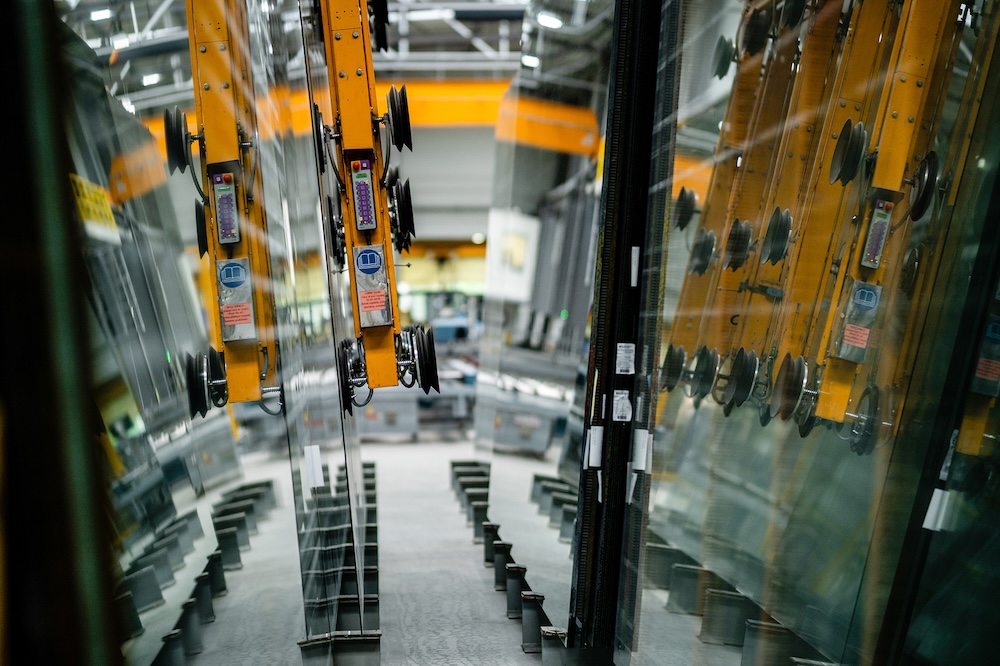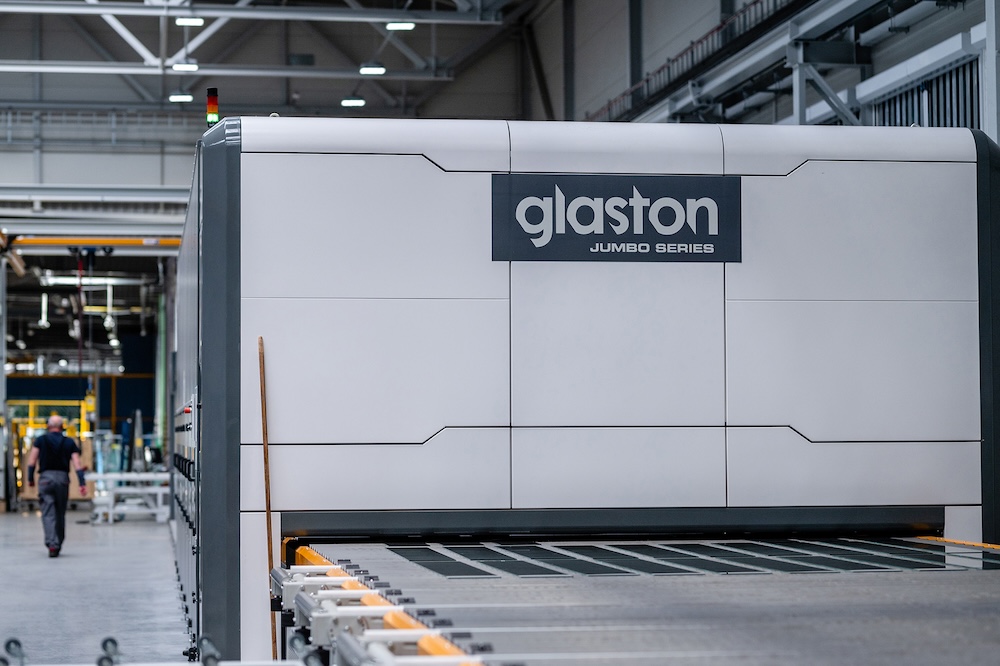
Tempered glass is produced through a special thermal treatment process in which a raw glass pane is heated to a high temperature (typically approx. 620–680 °C) and then rapidly cooled with jets of compressed air. As a result, internal stresses are created within the glass structure — compressive stresses on the surface and tensile stresses inside. These stresses are what give tempered glass its increased mechanical strength, including resistance to impact, bending, and compression.
In the event of breakage, tempered glass shatters into small, blunt-edged fragments, significantly reducing the risk of injury. This is a key feature in applications where user safety is of particular importance.
Tempered glass is widely used in both construction and interior design. Thanks to its properties, it combines a modern appearance with practicality and safety. It is commonly chosen for residential projects as well as public buildings, offices, and commercial facilities.
It is used, among others, in entrance and interior doors, where resistance to intensive use is essential. Tempered glass is also an ideal solution for shower enclosures, as it performs well in contact with moisture and withstands sudden temperature changes.
In architecture, tempered glass is used for balustrades, staircases, and façade glazing, giving buildings a light and modern character. Due to its high strength and safety, it is also suitable for shopfronts and large glazed areas where conventional glass would be too susceptible to damage. Tempered glass is also widely used in furniture applications — such as countertops, shelves, and partition walls — where elegance goes hand in hand with durability.