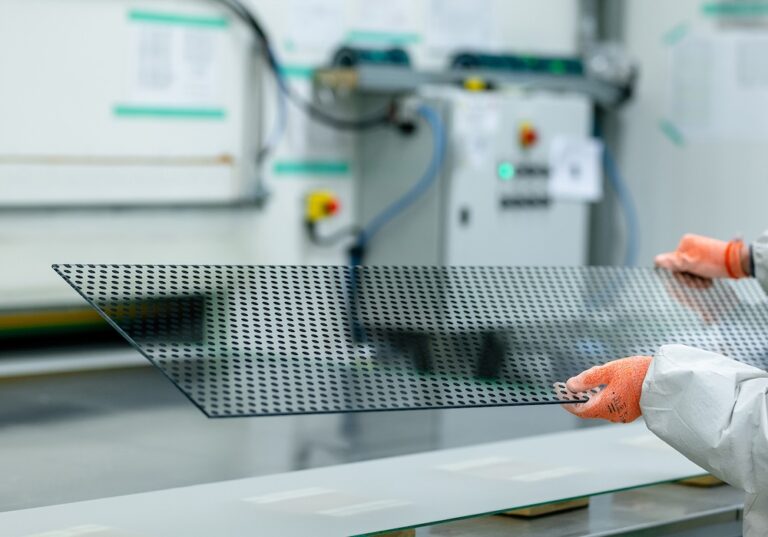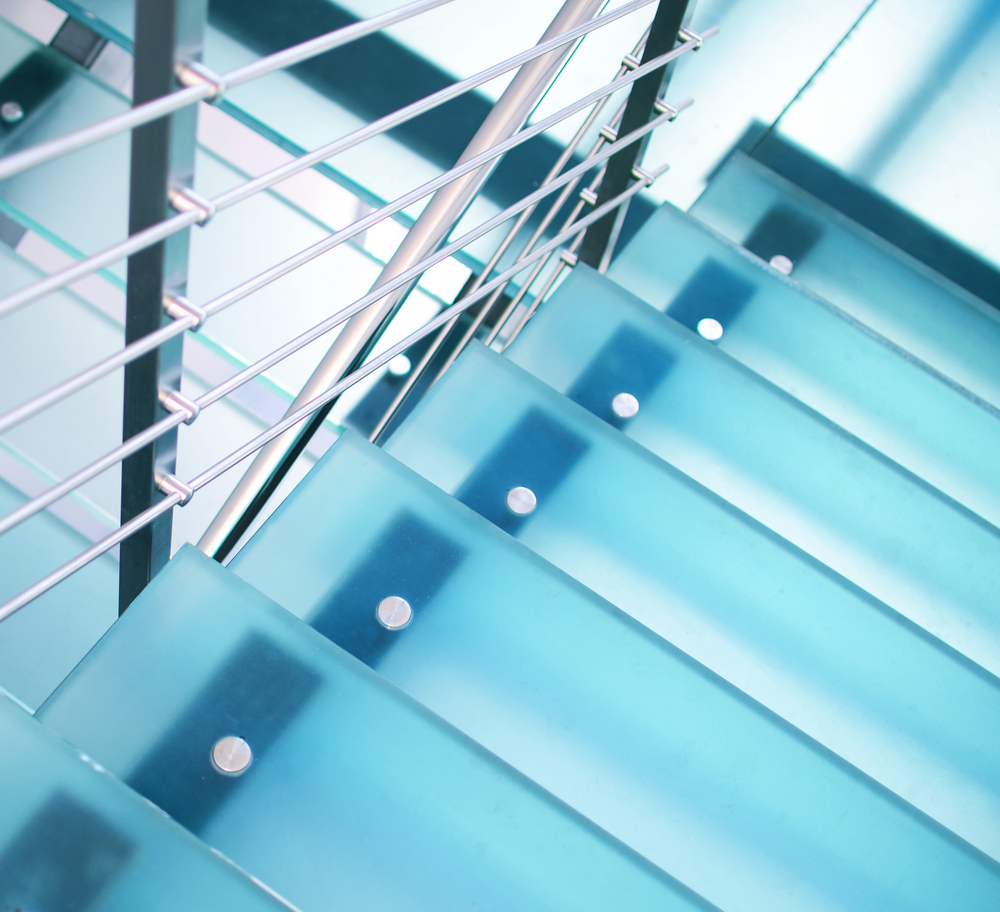
For stairs and floors, laminated glass (VSG) combined with tempered glass (ESG or TVG) is most commonly used. This configuration ensures exceptional durability and maximum user safety—even in the event of damage, the glass remains intact, held together by PVB or EVA interlayers.
Glass thickness and build-up are individually selected according to structural requirements and expected loads.
Tempered glass flooring combines outstanding strength with elegant aesthetics and is increasingly used for stair applications in modern interiors. Its durability and appearance make it suitable for both commercial and residential spaces, creating safe and visually impressive glass floor structures.
When designing glass stairs and floors, selecting the correct glass type and configuration for the expected loads is critical. Key factors include:

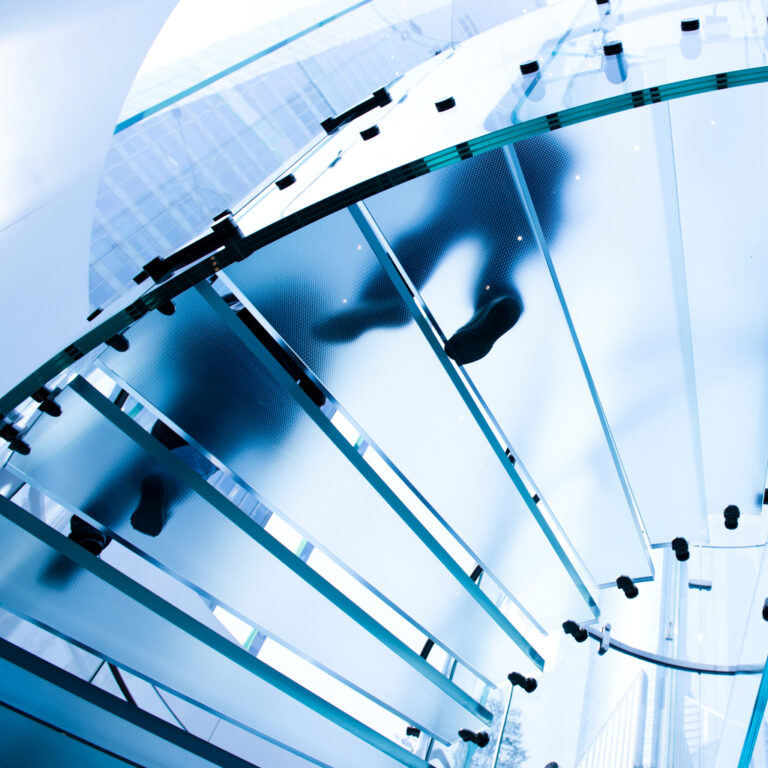
Slip resistance is a critical factor in walkable glass applications. That is why glass stairs and floors are equipped with anti-slip surfaces. This solution improves user comfort while meeting safety regulations, making glass constructions suitable for both private and public spaces.
Glass stairs and floors are modern finishing elements that add elegance and visual lightness to interiors. Their strength and resistance to heavy loads make them ideal where both aesthetics and functionality are equally important, enabling the creation of spaces with a distinctive, contemporary character.
Advanced machinery, enabling the production of large-format glass in custom shapes and thicknesses
Full quality control at every stage—from cutting and tempering to laminating and final finishing
Project-specific solutions, tailored to structural requirements, load calculations, and design intent
Comprehensive technical support, ensuring the final product is both visually striking and fully safe

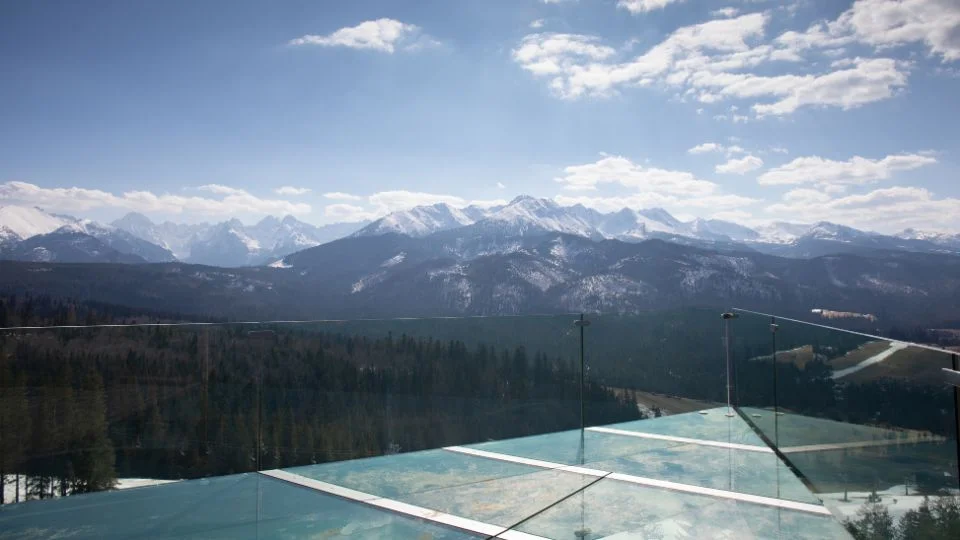
You can apply any pattern, graphic, inscription, or logo to glass using ceramic printing technology. Ceramic printing offers a wide range of personalization options—from subtle decorative motifs to expressive brand identity elements. This solution works well in both office and commercial spaces, as well as in modern private interiors. It transforms glass into not only a functional but also a uniquely aesthetic design element.